
Jimmy Carter, the 39th US president and a champion of peace and human rights, has died at the age of 100. Carter, who was known for his work with the Carter Center, promoting democracy and conflict resolution, was also a close friend of India. He visited the country in 1978, forging a lasting relationship between the two nations.

India and China have made "some progress" in disengagement, External Affairs Minister S Jaishankar said on Sunday, describing it as a "welcome" move which opens up the possibility that other steps could happen.

Concerned over household savings moving towards alternative investment avenues, RBI Governor Shaktikanta Das on Thursday asked banks to mobilise deposits through innovative products and services by leveraging their vast branch network. "Banks are taking greater recourse to short-term non-retail deposits and other instruments of liability to meet the incremental credit demand. "This, as I emphasised elsewhere, may potentially expose the banking system to structural liquidity issues," he said.
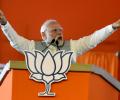
Prime Minister Narendra Modi's goal of making India a high-income economy by 2047 is unlikely to be achieved, but the country should become an upper middle-income nation by then, Financial Times chief economics commentator Martin Wolf said on Friday. Wolf further said that India would also become a superpower by 2047. "India wishes to become a high-income country by 2047.
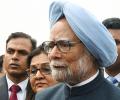
Condolences have poured in from across the globe, including from the United States, Canada and Sri Lanka following the demise of former Prime Minister Manmohan Singh.

Following the disengagement, both sides will soon start the coordinated patrolling in their respective areas, sources added.

Jaishankar said that both sides also exchanged views on the next steps in the India-China bilateral ties.

Stock exchanges are expanding the buffet of index derivatives even as the number of stocks permitted to trade in this space, generating an average daily turnover of Rs 450 trillion, is shrinking. This week, the National Stock Exchange (NSE) started issuing futures and options (F&O) contracts based on the Nifty Next 50 Index, bringing the total count of index derivatives to five.
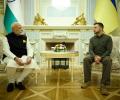
Ukraine and Russia need to engage with each other to find a solution to the ongoing conflict between them, India said on Friday after Prime Minister Narendra Modi held wide-ranging talks with President Volodymyr Zelenskyy in Kyiv under the shadow of the raging war.

'With India's growing capabilities in the space sector, this creates promising opportunities for enhanced collaboration and market access.'

President Droupadi Murmu on Tuesday said cyberattacks have emerged as a major threat to national security and the civil services and armed forces must join hands to create a secure nationwide system capable of thwarting them.
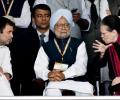
He drew the roadmap of India's economic reform, unshackled it from the licence raj and pulled it back from the brink when even its gold reserve was pledged.

Seeking to address international concerns, foreign ministry spokesman Zhao Lijian said China has been adjusting the zero-COVID policy based on the changing circumstances.
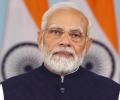
Prime Minister Narendra Modi on Friday expressed hope that G20 will draw inspiration from the vibrancy of the Indian economy and work towards bringing back stability, confidence and growth on the global landscape.
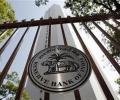
RBI said from data it had compiled as of March 31, 2013, four to six domestic banks would qualify under the D-SIB category.
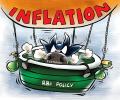
Amid a debate on the basis of a monetary policy stance, one may be curious enough to know how non-food retail inflation has behaved over the years in India. Let the eager souls catch a glimpse of facts. In the past 10 years, non-food inflation came down below 4 per cent on two occasions - pre-Covid period of 2019-20 and now in the first four months of the current financial year (FY25).

The government is planning to introduce legislative changes to the Foreign Exchange Management Act (Fema) regulations, with a focus on easing the pathway for inflows from a foreign portfolio investor to transition seamlessly into foreign direct investments (FDI) once the FPI surpasses the 10 per cent ownership threshold in a company. This move stems from multiple requests by foreign investors seeking to streamline the reporting requirements that arise when their stakes in Indian firms cross the 10 per cent mark.

Watch her in hand-to-hand combat, wielding guns, firing weapons and breaking bones like a beast in some of the sleekly done one-take sequences. She also owns some emotionally-charged moments within the same dramatic beat, observes Mayur Sanap.

Replying to a question in Rajya Sabha, Minister of State for Finance Nirmala Sitharaman said the drive against tax evasion is an ongoing process and the government has taken various steps under a multi-pronged strategy to deal with the issue of black money.

The Securities and Exchange Board of India (Sebi) may allow non-resident Indians (NRIs) and Overseas Citizens of India (OCIs) greater exposure to domestic equities if their investments are sent through foreign portfolio investors (FPIs) registered at the GIFT City International Financial Services Centre (IFSC). The proposal will be taken during Sebi's board meeting on Saturday along with other key agenda items such as easing of voluntary delisting mechanism and introduction of a regulatory framework for real estate fractional ownership platforms, said people in the know. At present, the combined holdings of NRIs and OCIs in a global fund have to be less than 50 per cent, while that of a single NRI or OCI is capped at 25 per cent.

Tech and startup industry bodies have again pushed back against calls by telecom operators to bring over-the-top (OTT) services under a licensing regime similar to telcos, and open them up to taxation. Ahead of public consultations on the issue later this week, the Internet & Mobile Association of India (IAMAI), Nasscom and the US India Strategic Partnership Forum (USISPF), among others, have written to the government arguing against such efforts.

The Indian startup ecosystem has lauded the inclusion of startups in the New Delhi Leaders' Declaration for the first time ever in the history of G20. Industry stakeholders say that the move will lead to easier access to capital, reduce regulatory hurdles, and may revive funding activity. The Declaration, through the Startup20 initiative, recognised startups as "natural engines of growth" and key to socio-economic transformation by driving innovation and creating employment.

The Union Finance Ministry on Friday announced key amendments to foreign exchange (forex) regulations, including mandating government approvals for all investments originating from countries that share land borders with India. The latest amendments also seek to simplify cross-border share swaps and streamline key definitions, such as "control". The updated regulations have aligned the treatment of downstream investments made by overseas citizen of India (OCI)-owned entities with those owned by non-resident Indians (NRIs) on a non-repatriation basis.

As we brace for unprecedented rates of urbanisation, it is crucial to ensure that illegal constructions and unauthorised land use are curbed, asserts Amit Kapoor.

Crypto assets should not be granted official currency or legal tender status, the much-awaited synthesis paper by the International Monetary Fund (IMF) and Financial Stability Board (FSB) has said ahead of the G20 leadership summit under India's presidency. However, the report has argued against a blanket ban on activities linked to crypto assets, explaining that such a move can be costly as well as technically demanding to enforce. Central banks should avoid holding crypto assets in their official reserve as they pose a risk to monetary and global financial stability, according to the synthesis paper.

India, the US and 12 other members of the IPEF grouping have signed a supply chain resilience agreement that would help mitigate risks of economic disruptions from supply chain shocks and improve crisis coordination. The agreement would help member countries like India to reduce their dependence on China and provide timely information to the IPEF member countries about potential supply disruptions. The COVID outbreak severely disrupted the global supply chain, as most countries were dependent on China for various products like pharma raw materials.

In June last year, India unveiled its first list of 29 critical minerals open for private sector exploration and mining. Since then, 38 critical mineral blocks have been auctioned, but only 14 - less than 37 per cent - have found bidders. This modest achievement was secured only after the Centre conducted a second round of auctions when the first round fell flat, failing to attract the minimum required bidders.

'In the next 15-20 years, India will have at least 50 new (AI-driven) billion-dollar companies that are going to solve problems for the largest companies around the world.'

The Reserve Bank on Wednesday approved a Rs 2.11 lakh crore dividend payout to the central government for 2023-24, more than double the amount it paid for the previous 2022-23 financial year. The decision was taken at the 608th meeting of the Central Board of Directors of the Reserve Bank of India held under the chairmanship of Governor Shaktikanta Das.

IIT Madras secured the top position out of the 10,885 institutes that took part in the NIRF's ninth edition.

Finance Minister Nirmala Sitharaman on Thursday said projects for port connectivity, tourism infrastructure and amenities will be taken up 'on our islands, including Lakshadweep' to address the 'emerging fervour' for domestic tourism in the country.

Prime Minister Narendra Modi on Thursday suggested the G20 trade ministers to work collectively to ensure equitable competition between large and small sellers as there are challenges in the fast growing cross-border e-commerce. In a video message at the G20 Trade and Investment Minister's meeting here, he also emphasised on the need to address the problems faced by consumers in fair price discovery and grievance handling mechanisms. "Digitising processes and use of e-commerce have the potential to enhance market access. "I am glad that your group is working on the 'High Level Principles for the Digitalization of Trade Documents'. These principles can help countries in implementing cross-border electronic trade measures, and reduce compliance burdens.

Reports (not denied by India) that the USA had 'for the first time provided real-time details to their Indian counterparts on the Chinese positions and force strength in advance of a PLA incursion' into Tawang at the LAC in December 2022, helping India thwart China's expansionist designs, show how operationally effective the USA-India friendship has become on the ground. A engaging excerpt from Sreeram Chaulia's must-read new book, Friends: India's Closest Strategic Partners.
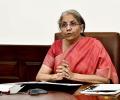
Finance Minister Nirmala Sitharaman on Wednesday said India is "very close" to arriving at the specifics of the two-pillar taxation proposition at the G20 and is in the last stage of finalising the details. A total of 130 countries had in July agreed to a overhaul of global tax norms to ensure that multinationals pay taxes wherever they operate and at a minimum 15 per cent rate. The finance ministry had then said that some significant issues including share of profit allocation and scope of subject to tax rules are yet to be addressed and a 'consensus agreement' is expected by October after working out the technical details of the proposal.

India's internet economy is estimated to reach $1 trillion by 2030, primarily due to e-commerce, which is expected to be worth $325 billion and rank third globally, according to industry experts. Last year marked a crucial turning point for India's e-commerce sector, with notable changes in consumer trends, technology, and regulations. InGovern Research Services, a leading corporate governance advisory firm, hosted a virtual roundtable to deliberate on the notable developments in India's e-commerce sector in 2023, with a particular focus on the essential role of customer trust in fueling its ongoing expansion.

The compulsion behind India and Japan to deepen security cooperation is in response to China's growing political and economic clout and its assertive behaviour in disputed areas. This has been the key driver for bringing both India and Japan closer in the domain of security cooperation, explains Dr Rajaram Panda.

Clearly, LoCs are becoming a key arrow in India's economic diplomacy quiver.

Many who track the ministry and the technology sector closely believe that the space won't see much impact on the policymaking side, but the gestation time for regulations might get long, as now there could be a wider consensus-building exercise on policy matters under a coalition government.

Introduced by the tycoon Lakshmi Niwas Mittal at the World Steel Association, the top administration official argued that the international system is changing and hence 'great,large countries' would have to be accommodated in that global framework.

Kamala has finessed bubblegum conversation about whether she is Black or Indian. Her Irrelevancing-approach, an Irrelevance-code if you will, is Elevated and Elegant -- this is the Elevance of Kamala! asserts economist Dr Anuradha Luther Maitra.
